In modern manufacturing, sheet metal fabrication is widely evaluated in the manufacturing process and plays a vital role in connecting prototype manufacturing and series production. However, as the application fields continue to expand, the cost of sheet metal fabrication has also become one of the hot spots for product projects. Each of these has associated costs, from design to prototyping to precision machining processes, and advancement requires financial support.
In this context, what kind of sheet metal fabrication method is the most economical? This article will conduct in-depth research on various factors that affect sheet metal fabrication costs, the cost characteristics of common sheet metal fabrication methods, and how to choose the most economical sheet metal fabrication solution. It will help you choose the most economical sheet metal fabrication method so that you can complete your project. Save costs as much as possible and improve economic benefits.
Sheet metal fabrication usually refers to a series of machining operations of the metal sheet (usually below 6mm) designed to plastic and deform the metal sheet to form the desired shape and size.
The sheet metal fabrication process is a step-by-step approach that starts with determining the design requirements. It includes considering dimensional constraints, after which you choose the material for fabrication design. Subsequently, you create fabrication design blueprints that present sketches of the structure and geometry of sheet metal parts on paper. The creation of computer-aided design (CAD) comes next, where you have the model drawn to scale. Additional steps include considering the design for manufacturability (DFM), which involves evaluating manufacturing constraints, simplifying part geometries, and optimizing the number of manufacturing operations.
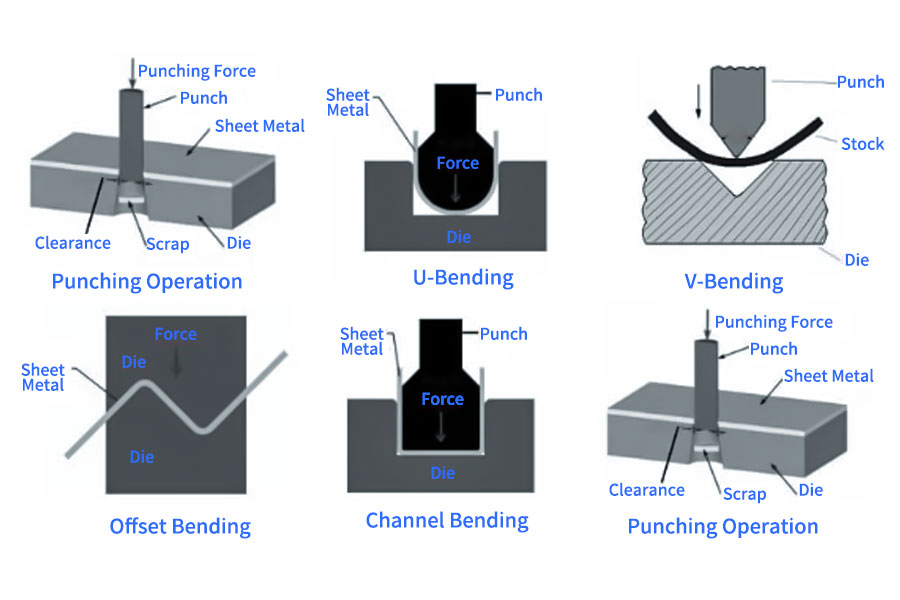
Stamping uses dies and stamp presses to shape metal coils and sheets. It uses both cutting and forming operations at room temperature to achieve maximum results. Stamping encompasses various techniques including piercing, blanking, drawing, coining, and embossing.
Piercing and blanking are simpler and are usually carried out as the first step in sheet metal fabrication. Drawing, embossing, and coining are more complex and can create intricate shapes and designs that do not require further processing.
Shearing is the most common and basic process in sheet metal processing. It refers to the deformation form in which the cross section between the two forces is affected by the same transverse force, the opposite direction and the action line of the component is very close. Equipment such as plate shears are usually used to cut the plate into the desired shape and size through mechanical shear.
Laser cutting is the use of laser beam to illuminate the surface of sheet metal material, through the high energy density laser beam local heating and rapid cooling, so that the material melting, vaporization, ablation or reach the ignition point, at the same time with high speed air flow will melt or ablated material blown away, so as to achieve the purpose of cutting or drilling.
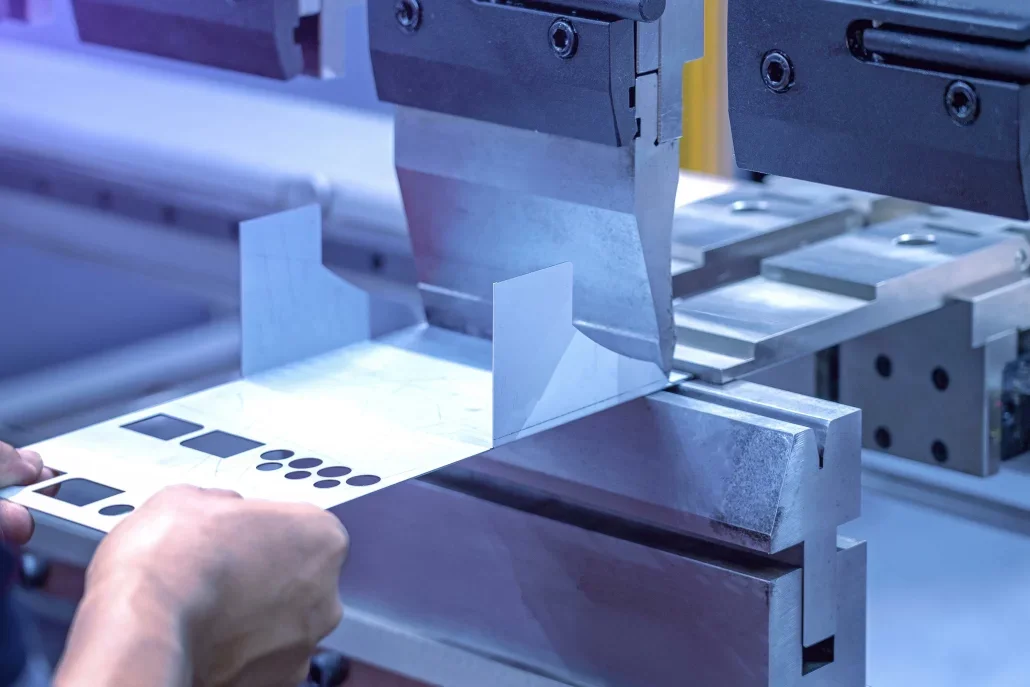
Bending is the processing method of plastic deformation of the sheet metal parts. According to the dimension of the bending diagram, the bending machine is used to bend the workpiece.
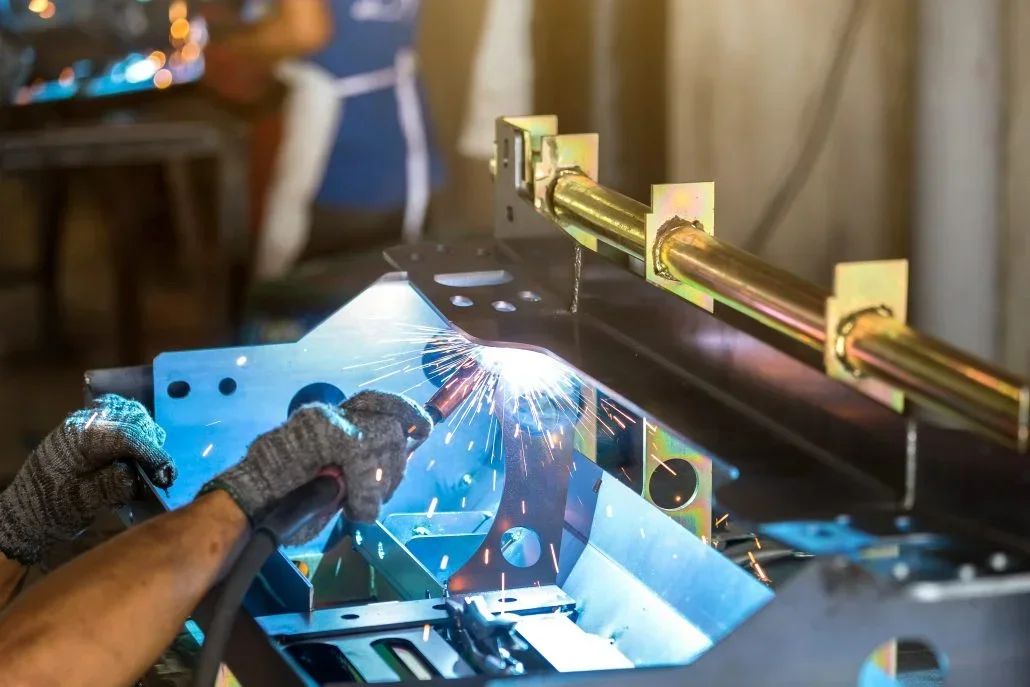
The welding process joins two or more metal parts together using heat, pressure, or a combination of both. Usually, a filler material is added to give a strong weldment as it cools and solidifies.
The most common welding techniques used for metal parts fabrication include Metal inert gas welding, tungsten inert gas welding, and metal active gas welding. They are carried out in different ways and have unique advantages and applications.
Sheet metal fabrication includes a variety of techniques that offer many benefits. The final parts have uniform wall thickness with remarkable mechanical properties. The following are some of the major advantages of sheet metal fabrication
The accuracy and efficiency of sheet metal fabrication are top-notch. It is suitable for producing both prototypes and end-use parts.
Furthermore, it is critical to understand that most sheet metal techniques are automated. The use of CAD software and CNC machining eliminates human errors. As a result, the final products usually have few or no deformations.
The sheet metal fabrication process uses an array of techniques and tools. This makes it easy to choose the most suitable method for your project.
Furthermore, metal parts fabrication does not limit the materials one can use. There are a thousand and more compatible metals. However, the application of the final part will influence the material you use.
With sheet metal fabrication, one can achieve a production capacity that is equal to the market demands. Though the initial cost may be high and the time of setting up may be long, it gets better when production begins. The more the parts produced, the more money one saves.
Sheet metal fabrication produces lightweight yet durable parts. The excellent light-weight-to-strength ratio makes them useful in automotive and aerospace part manufacturing. Ultimately, it reduces manufacturing costs and improves fuel efficiency.
Sheet metal fabrication can be used to come up with innovative designs to build customized and unique parts. It is flexible and easily transforms metal sheets into personalized and aesthetically pleasing parts. The metal sheet fabricator can come up with innovative ideas and produce functional customized products.
Most times, sheet metal fabricated parts require further polishing and post-processing to achieve the desired surface finish. There are many options available that serve both decorative and functional purposes. Here are the common surface finishes for sheet metal fabrication:
Electroplating involves depositing a metal layer onto the surface of the metal sheet using an external current. This process ensures surface uniformity and minimizes friction. Additionally, electroplated parts are corrosion and wear-resistant.
Bead blasting uses a spherical medium or other abrasive jet to dimple the surface of a metal sheet. By spraying at a high speed, the material creates an impact that leaves a matte texture and a more uniform finish. Note that the blasting medium one uses will determine what the surface will look like.
Polishing is an aggressive process that uses a cloth wheel to “buff” or rub the metal surface to make it appear shiny. It removes rust, prevents corrosion, and further oxidation.
This is directly spraying a charged metal component with dry powdered paint. Then, cure under UV light or in an oven to melt and adhere the powder to the metal. This process leaves a glossy or semi-glossy texture that is resistant to wear.
Anodizing is an electrolytic passivation process that converts the surface of the fabricated part into a thin but durable anodic oxide. This extra thickening makes the part nonreactive and corrosion-resistant. It also has aesthetic functions as it leaves a smooth and matte finish.